The Romance Reviews
Showing posts with label historical fiction. Show all posts

Monday, 28 July 2014

Forever His - Slaves in my Fiction by Lindsay Townsend

Roman woman and her slave
(Photo Giovanni dall'Orto, Peiraius
Museum (Wkimedia Commons).
Writing about the ancient and medieval worlds as I do I often encounter slavery as a fact of life. I explore this dynamic in some of my stories, in a careful way. Slavery was often utterly cruel and the harsh realities of life on the latifundia farms of Ancient Rome could be terrible.

For some slaves life could be a little easier, especially in personal, one to one relationships. So we have the tombstones of former slaves such as Regina (Queenie) at the ancient Roman fort near South Shields. Regina was a former slave, freed by her master who had married her. I explore that kind of hopeful dynamic in my novel Flavia's Secret and my shorter stories, Escape to Love and Silk and Steel.

I show the grimmer side of slavery in my epic adventure romances, Bronze Lightning and Blue Gold. In Bronze Lighting the heroine, Sarmatia, is captured and enslaved for a time by her enemy Carvin, the brutal king of the lands around Avebury. In Blue Gold, several characters are enslaved and must fight to regain their freedom.

Sometimes I explore aspects of submission and dominance in my stories. In my historical romances, I find this works well, fitting into the beliefs of the time. This is especially true in my medieval romances The Snow Bride, its sequel A Summer Bewitchment, and my forthcoming novella, The Virgin, the Knight and the Unicorn. Now with 10% off at Bookstrand until July 8th

I also have one light BDSM novel, Asking Too Much, set in a future where men or women can sell themselves into a consensual 'slavery' for a time.

The dynamics of acceptance and trust inspire me to explore such themes in my work. Bullying does not appeal at all to me but a situation where a man and woman come together in love, trust and respect where the heroine allows the hero to take care of her in masterful ways - that works for me.

You can see my slave and other fiction on my Amazon Author Page here and here

You can also see my slave and other fiction at SirenBookstrand at my Bookstrand Author Page here. This page also links to excerpts and reviews.

Saturday, 17 May 2014

A new Viking Romantic adventure ~ VIKING MAGIC


Blurb:

When Gisla hurls herself aboard Flane’s longship, she is desperate to avoid marriage to Karli Olafsson. Oli, Flane’s 16-year-old foster-son, thinks she’s the most wonderful girl he’s ever seen. But a Viking warship follows them home to Scotland. Can Flane and Oli protect Gisla without endangering themselves and their families? What is so fearful about Karli Olafsson? Why do the men of Dyflin, as well as the girl, fear him?
Adventures, romance and magic meld in VIKING MAGIC to provide a fascinating tale of love, sacrifice and undeniable passion.

Excerpt:

Oli grabbed Flane’s arm. ‘You won’t make her go back?’

Flane looked down. It was not a boy’s hand clamped so fiercely around his arm, but the large, muscular hand of a man. Though Oli’s voice had broken early, he’d still acted like a boy. Now the boy was disappearing in front of his eyes, and the man was an unknown entity.

‘Some men will not take kindly to a bride escaping. They’ll come after her.’

Oli’s jaw clenched.

‘What if a sixty-strong warband arrives tomorrow?’ Flane went on. ‘We have only half that strength. You would put the lives of all at the Steading at risk?’

‘They’d protect her,’ Oli declared. ‘I’m sure they would!’ He appealed to Hakon. ‘You’d protect her, wouldn’t you?’

‘We might have to. Or at least protect ourselves.’ Grim-faced, Hakon nodded to the seaward end of the loch. ‘Look out there.’

Flane and Oli swung round. A ship stood at the mid-point of the loch, neatly framed by the mountains on either side of the water. The red and white striped sail, clear in the half light of the northern summer evening, shuddered as the breeze disappeared with the last of the sun’s rays.

Beside him, the girl moaned on an indrawn breath. Her hand covered her mouth, and her eyes stared unblinking at the ship. Flane looked at Hakon.

The big man shrugged. ‘She told us her father is Harold Ice-Walker. He’s the least of our problems. Her prospective father-in-law is Erik Bloodaxe.’

http://www.amazon.com/dp/B00K5S3BX0

Thursday, 29 August 2013

Victorian Beauty by Jen Black

I got a tiny bit tired of reading about Victorian London or Regency Bath, so when Melanie Grey became the focus of my Victorian tale, I decided to set her and the story in a locality I'm familiar with - Northumberland. For those of you not familiar with this beautiful county, it is on the eastern side of England right up against the border with Scotland. If you read my blog (jen.black11@btopenworld.com) or see my posts on Facebook, you'll know that I love taking photographs of the countryside and posting them for all to see.

I also decided it was time to have a heroine with a problem she could not change, so I gave her a facial scar, an abusive husband and a step-son who all but throws her out of her home when she is widowed. For Melanie, it is back to the beginning with a vengeance, and I was curious to see how she got on....

Excerpt: Chapter One:

Melanie Grey pulled down the veil attached to her hat and glanced cautiously through the window as the horses slowed and turned into the inn yard. The door of the grey stone building stood open and a grey cat, tail curled neatly around its front paws, sat on the windowsill. Oak trees flourished behind the inn, their leafy branches bowing low over the heavy slate roof. Smoke from the squat chimney coiled and drifted into the still air.
It was a far cry from the grand hostelries of southern England she had frequented in the past. So much quieter here; no sign of frantic stable-boys and grooms hurrying to change the horses before the next coach arrived. Faded paint curled from the ancient sign of a blackbird above the inn doorway.
She heard voices. Angry voices. Frowning, she leaned closer to the coach window. In the dusty space between an abandoned wheelbarrow and the stable door, a tall youth argued with a child. Something the child said made him raise his hand and he slapped the boy, who staggered under the blow.
Melanie gasped, one hand rising to her mouth. The child, no more than eight or nine, did not cower away; instead, crimson with rage, he recovered his balance and kicked out with a hob-nailed boot that connected with the youth’s shin bone. Dancing out of reach, he yelled something that made the older lad snarl and lunge toward him.
Cold with horror, knowing she ought to intervene, Melanie grabbed the leather strap, released the window and their rough voices poured into the coach.
‘Come ’ere, you little guttersnipe!’
‘Not bloody likely!’ The child skipped nimbly out of reach.
‘Stop! Stop at once!’ Because she was afraid, her voice carried no conviction. The young man ignored her, but the boy saw her and offered a swift, gap-toothed grin as he backed rapidly away from danger. He collided with the gentleman leading his horse around the front of Melanie’s coach.
‘Ouf! Steady, lad!’ The man gripped the child’s shoulder to keep him upright. ‘What’s amiss here?’ His expression hardened as the bully, fists clenched, advanced on them both and he pushed the boy behind him.
Melanie, weak with relief, shuffled back into her seat. The boy was saved. She need do nothing. Once she would have been out there in the dust of the inn yard, standing toe-to-toe with the bully and caring not a jot for his regard. Her accident had scarred more than her face, she thought ruefully.
‘What’s going on here?’
‘That’s my uncle Bert,’ the boy’s voice cried.
‘He’s your uncle, you say?’ The gentleman’s cultured, mellow voice sounded faintly amused. Or was it disbelief she could hear in his warm tone? ‘Then he should protect you rather than beat you.’
Edging forward, Melanie risked another glance at the scene outside. The grooms, who should have been changing the horses, loitered in a group by the stable door, grinning.
The child glared at his relative and stuck out his tongue.
The youth, his face ugly with temper, took a step towards the boy. ‘That lyin’ young varmint needs a lesson in doing as he’s told! Come ’ere, Toby Redman, before ah lose me temper and clatter yer ’ead against t’wall.’
Melanie shuddered.

Victorian Beauty is available on Amazon Kindle: Here

Sunday, 9 December 2012

Guest blog: Jean Gill - 'Song at Dawn'

‘Song at Dawn’
Winner of the Global Ebooks Award 2012 for Best Historical Fiction (Medieval)

'Believable, page-turning and memorable' - S.P.Review 

On the run from abuse, Estela wakes in a ditch with only her lute, her amazing voice, and a dagger hidden in her petticoats. Her talent finds a patron in Aliénor of Aquitaine and more than a music tutor in the Queen's finest troubadour and Commander of the Guard, Dragonetz los Pros. Weary of war, Dragonetz uses Jewish money and Moorish expertise to build that most modern of inventions, a papermill, arousing the wrath of the Church. Their enemies gather, ready to light the political and religious powder-keg of medieval Narbonne. 

FREE FOR CHRISTMAS until 24th December -  spread the word!

Use coupon FF49C when you checkout

If you can find the time to post a review, it would be much appreciated. Jean likes to hear from readers, so contact her with questions or comments, at jean.gill@wanadoo.fr

‘Song at Dawn’
Extract from Chapter 7

1150
Dragonetz is Commander of the Guard and Troubadour to Aliénor (Eleanor) of Aquitaine, Queen of France, and Estela is the mystery girl Aliénor has required him to tutor. 
In this part of the story he is showing her his secret building project, a paper mill. At this time in Europe, only the Moors had the skills to make paper. 

 ‘That, my sweet Estela, is the beauty of it! I shall sell paper to the Church for enormous profit and I shall be fantastically rich! As shall my workers.’
Estela chewed the side of a finger, a bad habit she had kept from childhood. ‘The Church won’t like it,’ she stated.
‘No, they won’t.’
‘That makes a dangerous enemy.’ Estela stated the fact.
‘We’ve told him,’ Raoulf was gloomy. ‘But you can see what he’s like. The future pff!’ and he spat, coarsely. ‘The future will be my Lord’s body with a bolt through it!’
‘Ever the optimist!’ Dragonetz clapped Raoulf on the back. ‘That’s what you’re here for, you and your men, to watch my mill and watch my back. Speaking of which, this should make things even.’ With which enigmatic statement, he tore off his doublet and underthings so that he too was bare to the waist, then he grabbed Arnaut’s hand and dragged his unwilling man into a run. Shouting, ‘I said I owed him a ducking,’ Dragonetz ran the two of them straight off the edge of the bank into the river.
‘You mad whore-son,’ burst from Raoulf as he rushed after them to the bank, anxiously scanning the murky water for signs of life. Estela counted to thirty before two heads burst up above the surface, gasping, spouting and followed by thrashing arms. Arnaut twisted underwater, avoiding Dragonetz’ attempt to duck him again and came up at a safe distance, both men treading water and spluttering. ‘Come and join us, Estela,’  Dragonetz called to her.
‘Can’t swim,’ she yelled back.
‘What are you thinking of, bringing a Lady here!’ Raoulf shouted, purple with annoyance.
‘A Lady! I’d forgotten!’
‘Oh my God, no,’ groaned Raoulf.
‘Estela, my sweet, Arnaut wants to do combat and regain his pride – throw us a token.’
Without thinking, Estela pulled the bangle off her arm and threw it in a high arc to land equidistant from the two men. Neither wasted words but dived underneath, rippling the surface as they carved the water underneath. Another count, thirty, forty, Estela thought that Raoulf would explode, holding his own breath to see how long it was possible, then Arnaut broke surface, gasping, followed quickly by a triumphant Dragonetz whooping and waving the bangle in the air.
‘She’s not an ordinary Lady,’ he yelled, ‘she’s a Troubairitz! Ask her!’ And then he struck out for the bank, Arnaut following at a safe distance and after some horseplay with Dragonetz trying to prevent Arnaut getting out the water, both men stood dripping and laughing, pushing each other. Dragonetz waved the bangle, taunting, and Arnaut stood, bent double, getting the words out with difficulty. ‘You always have to win, don’t you, even when you don’t want the prize!’
Dragonetz’ eyes glittered. ‘Always, Arnaut, always,’ and then he knelt in front of Estela, offering her the bangle back. She looked down on the black curly hair, bent in mock homage, the broad, wet shoulders, the long tapered fingers reaching out to her, returning her token. She felt Arnaut’s stillness, the sunshine, the moment to which this day had been leading all along. She thought of Peire, his disappointment over something so small, so easily given, so wrongly with-held. It was her moment and she could do anything she liked with it. She shut her eyes and felt for the lyric. If this were a song, how would it go? And then she knew what to do.

Want to read more ?

FREE FOR CHRISTMAS until 24th December
Use coupon FF49C when you checkout

If you can find the time to post a review, it would be much appreciated. Jean likes to hear from readers, so contact her with questions or comments, at jean.gill@wanadoo.fr

ENTER THE DRAW FOR A SIGNED PRINT BOOK VERSION
Visit http://sooozsaysstuff.blogspot.co.uk/ and get the details


About the author:

Jean Gill is a Welsh writer and photographer living in the south of France with a big white dog, a Nikon D700 and a man. For many years, she taught English in Wales and was the first woman to be a secondary headteacher in Carmarthenshire. She is mother or stepmother to five children.

Publications are varied, including prize-winning poetry and novels, military history, translated books on dog training, and a cookery book on goat cheese. With Scottish parents, an English birthplace and French residence, she can usually support the winning team on most sporting occasions.


Monday, 7 May 2012

How not to wake your man early in the morning...


Peering around the door, Frances noted two large windows and followed the sunshine to a tray, bearing the gnawed remnants of a cube of cheese and a heel of a crusty loaf, balanced precariously half on and half off the ottoman at the end of the bed. An old rocking chair stood in the corner between the two windows.

Frances pushed the door wider, stepped forward, and gazed at the bed.

The Marquess lay flat on his back, one wrist across his brow, the other hung over the edge of the bed as if reaching toward the fallen wine bottle on the floor. He had kicked off his boots and abandoned them where they fell. It looked as if he had struggled to remove his shirt and fallen asleep with the task unfinished.

Torn between amused horror at the widespread disorder and relief he was safe, Frances choked back an urge to giggle. He was safe and unharmed, though without doubt he would have a prodigious headache when he awoke. Now she ought to leave at once. He would not be pleased to find her here. And she most certainly did not wish to be found sneaking into a gentleman’s chambers. The impropriety of what she had done struck her quite suddenly and made her catch her breath.

She stepped back and caught a spur in her skirt.

Off-balance, she toppled back against the door. The solid wood banged shut with a noise like thunder, and she fell against it.

Oh Lord!

Petrified, Frances glanced at the bed. Streatham’s wrist slid down, his lids lifted, and he gazed at the bed canopy above him.

Jack stared at the ceiling.

Frances did not dare move, hardly dared to breathe. The slightest movement would draw his attention to her. She held her breath and hoped he would drift off back to sleep.

He would be furious she had invaded his home, his privacy, his grief.

How had she ever thought coming here had been a sensible thing to do? Arriving alone at a gentleman’s house was the height of folly. As she stared at him, her reasons suddenly seemed specious indeed. His well-being was not her concern and never would be.

Her thigh muscles ached from holding her in such an awkward position against the door. Skin prickling with unease, heart thundering against her ribs, she waited. Oh, dear Lord, she was going to collapse to the floor if he did not shut his eyes soon. Her thighs burned and trembled. She had to breathe—

His hand flopped to the mattress, his head rolled on the pillow, and his wide, vacant gaze slowly focused on her. “Why, Lady Rathmere…”

Through the thunder of blood in her ears, his voice reached her as if from a great distance.

His brows drew together. “What the blazes are you doing here?”

Frances struggled upright and took a step away from the door. “To, er…see you got home safely. After last night. You know. You were drunk and probably don’t remember.” Frances shook out her skirts and tugged the jacket of her riding habit into place without looking in his direction. Her face burned and prickled as blood suffused her skin.

He groaned, then sank back against the pillows, a fingertip pressed to each temple.

Clearly he had a monstrous headache. Her mouth twitched. There was a God after all. If she simply opened the door and retreated, he might not notice until too late.

Her hand closed on the door knob.

“Frances?”

She glanced over her shoulder and sucked in a shocked breath. His hollowed cheeks, tangled hair, and shadowed eyes spoke of sleepless nights, misery, and deprivation. With a huge effort, he pushed to his feet and stood there swaying as if a huge wind roared through the room.

Her breath caught uncomfortably in her throat and forced her to swallow. Her gaze skimmed over his brown skin, traced the strong tendons of his throat, lingered on the spreading collarbones, and glimpsed the strong muscled chest revealed by the crumpled shirt falling away from his shoulder.

Frances coughed and looked away. She had visited museums and galleries and marvelled at works of art depicting man in extremis, but now, when the real thing stood before her, she did not know what to say or do. Cold white marble was all very well, but gleaming brown skin was much more shocking.

“What the devil are you doing here?” He hitched the drooping shirt back onto his shoulder, swayed, and grasped the bed post to prevent toppling onto the mattress. “Well?”

He scowled at her. No statue she had ever seen looked as angry as he did at this moment. Frances blinked, cleared her throat, and turned to the door once again.

His eyes narrowed. When he took a step toward her, Frances bit back a wheeze of fright and wrenched the door open.


Visit Jen's blog and say Hello! http://jenblackauthor.blogspot.com

Wednesday, 21 December 2011

Aydon exists!

Aydon Hall, sometimes called Aydon Castle, is only six miles away from my home, and I often walk there, through the woods from Corbridge and up the steep path to emerge panting and rather warm at the postern gate.
the main hall at Aydon


Late spring is particularly nice as everything is green and the bluebells and white garlic flowers abound. It was originally built as a farmhouse, but Scots raiders created so much havoc in the thirteenth century that the owner applied for permission to crenellate. He needed something to hide behind while he shot arrows from the battlements at the men stealing his cattle and trying to burn him out of house and home!

The Carnaby family lived there in the sixteenth century and though I've invented a character or two, that's the only liberty I've taken with the history of the place. There were sons and daughters of the family called Lance and Alina, but they were not exactly as I've portrayed them in my story. Matho Spirston, for example, is mentioned in the rolls and deeds of the time, though all that exists is his name. I've given him a character and a life within the story as the man who saves Harry's life and then goes on to have adventures of his own.

If you want to know more about the Carnaby family and Aydon Hall, then cick on the link and enjoy the reviews you'll find there. http://tiny.cc/g7ddy

Sunday, 14 August 2011

Guest Blog: Alan Calder - 'The Stuart Agenda'

Today we have novelist and poet Alan Calder at Lindsay's Romantics, chatting about his debut title, 'The Stuart Agenda'. Welcome, Alan!

Your novel is based on a very original and also topical idea. Would you like to tell us more about the inspiration of that idea and how you developed it?

As my thoughts were turning to novel writing, I was reading the seminal 'Holy Blood and the Holy Grail', which had been in print for some time and was clearly also being read by Dan Brown, since the 'Da Vinci Code' appeared a few years later. A sceptical mind is attracted to conspiracy theories, particularly on the epic scale laid out in 'The Holy Blood and the Holy Grail'. I found it deliciously blasphemous that the blood lines of some of our most famous families might be descended from Christ.

In particular, the Catholic Royal House of Stuart seemed doubly blessed in being connected through both Mary Magdalene and Joseph of Arimathea. This might explain the Stuart’s insistence on divine right to absolute rule under God, without the intervention of Parliament. This stance, along with their inconvenient Catholicism, cost some of them their heads and eventually, after the protestant daughters of James II failed to produce living heirs, extinguished the Stuart flame. This made way for the protestant Hanoverians, who could claim distant Stuart ancestry through a daughter of Charles I, over the heads of a long list of Catholics at the head of which was Bonnie Prince Charlie’s father.

The failure of the subsequent Jacobite rebellions, ending in the defeat of Bonnie Prince Charlie, grandson of James II, at Culloden in 1746, finally consigned the dynasty to a footnote in history. It was a great comfort to the Hanoverians that neither Bonnie Prince Charlie, nor his brother, an eminent Catholic Cardinal, had any legitimate heirs. The lack of a future generation of Stuart champions and the brutal suppression and ethnic cleansing of Jacobites, especially in the Highlands of Scotland, led the Stuart cause to fizzle out.

The final trigger for The Stuart Agenda was a book written by the self-styled ‘Prince Michael of Albany’. In The Forgotten Monarchy of Scotland, he tried to turn history on its head by claiming that Bonnie Prince Charlie married again late in his life and had a legitimate son, from whom he is directly descended. ‘Prince Michael’ claims, not surprisingly, that the Hanoverian spin doctors airbrushed this inconvenient and threatening marriage and birth, out of the history books.

It’s a good conspiracy story and it did make me wonder. Could a new legitimate but hitherto hidden Stuart scion be implanted into the developing Scottish political and constitutional scene? At this moment the Nationalists are forming their first majority government, although the vote looks more like a personal mandate for the brilliant and charismatic Alex Salmond, than an expression of thirst for independence, but you have to start somewhere.

The current Nationalist constitutional holding position is that Scotland would retain the Hanoverian monarchy. This is surely a disingenuous platform that has more to do with the softly softly, step by step approach to independence, than red blooded royalism. At independence, the Scots would want to vote directly on their preferred constitutional model and that would probably be a republic. But what if a charismatic young Stuart appeared to reclaim his inheritance?

The Stuart Agenda is set well into the future in the 2030’s and assumes that the path to Scottish independence will be long and tortuous and that the current euphoric position is merely a false dawn. It is also now clear that the royal couple on the British throne in the timeframe of the novel will probably be the recently married William and Kate, now styled the Duke and Duchess of Cambridge.

What draws you to writing about Scotland?

Scotland and its history has certainly been the stimulus for both The Stuart Agenda and my second book, The Glorious Twelfth which is in final manuscript form. Both are contemporary thrillers in which the characters are handed their roles from history. The draw for me has been the direct interest in Scottish history, which has thrown up intriguing ‘what ifs’ and conspiracy theories. At the same time my characters do travel, especially to France where I lived for a few years in the 1980’s.

In fact my third book is based there, with no connection to Scotland, although it is based on an interpretation of a period of French history this time, plus a juicy conspiracy theory.

Do you plot your stories in detail or do you launch yourself straight in? Or is it a mixture?

This sounds like the ‘How do you write question.’ I start with an idea eg in the case of The Stuart Agenda, the key idea is that Bonnie Prince Charlie did indeed have legitimate descendents. That reality gave a basic cast of characters headed by the Stuart scion and his key supporters. A particular difficulty with The Stuart Agenda was knowing where to start in the lifecycle of the hero. In the earliest version of the story I began before he was born. Several versions later the published story begins with the Stuart scion as a teenager at Gordonstoun. I also had to create a motivation for the Stuart family to take on such a seemingly impossible task, recovering the throne of Scotland, nearly three hundred years after Culloden. On that base I plotted several chapters ahead and enjoyed the experience of being led by the characters themselves and creating the elaborate loops that bind them all together.

Do you write every day?

I am not a disciplined every day writer. I tend to write in manic bursts for up to two weeks at a time. Then I take a break and begin to mull the next steps before building up to write again. I’m also finding that being published means you have to spend a lot of time promoting the book. I don’t find that as satisfying as writing.

Are you excited about being part of the ebook revolution? What advantages do you think there are to being e-published?

e-Publishing is exciting and for many new writers, weary of the traditional publisher’s slush piles, it is the art of the possible. It represents a practical route to getting published either by the new breed of smaller mainly US publishers who are innovating or by many of the self-publishing independent routes being established. The current growth rate of e-published books is spectacular. They are here to stay and over time will become the dominant access vehicle for the general reader.

When you're not writing, how do you relax?

I do read a lot on current affairs, business, politics and science, particularly genetics, a habit from my senior executive days. For fiction, I enjoy history and the novels of writers like Sebastian Faulks, although I found ‘Human Traces’ rather hard going. At this moment I’m reading ‘On thin Ice’ by Richard Ellis. He charts the changing world and fortunes of the polar bear. I’m also reading ‘The Scots, A Genetic Journey’ by Alistair Moffat and Jim Wilson. The latter prompted me to have my Y-Chromosome status checked. I’m Celtic in origin, not a Viking like many of my Caithness compatriots.

I’ve also recently read ‘One day’ by David Nicholls. I liked the idea of the book, the structure that led us through the frustrated lives of the characters. I didn’t like the end; I thought that the heroine’s demise lacked imagination, as though the author was completely exhausted by the time he got to that bit. Nevertheless I’m looking forward to the weepy film.

In the lulls between bursts of novel writing I increasingly enjoy writing poetry. There is certainly more instant gratification in crafting a few pleasing verses about the human condition or a rant about wind farms or even a piece to explain and explore what some aspect of science means. I certainly see all that as legitimate territory for poets.

Lest I give an impression of being study bound, I should also say that I like cooking, eating well and drinking wine. Salmon fishing is one of my little luxuries; I’ll spend the first week of October on the Thurso River in Caithness, with old friends from America. We’ve already started the countdown prayers for the right amount of water, wind, cloud cover etc without which we shall have perfect excuses for catching very little.

Please share a blurb and excerpt with us.

Blurb

In 2035, young Robert Stuart sets out on a journey to recapture the Scottish throne in an independent Scotland. A cast of conspirators led by his great uncle Leo prepare the political and constitutional ground for him. Robert meets and falls in love with the beautiful Hanoverian Princess Victoria, providing a basis for a dynastic compromise. Robert has to overcome strong resistance from the Hanoverian establishment and from within his own family if he is to succeed in his ambition.

Excerpt

Robert’s declaration on the Culloden Battlefield.

The Prince’s troops, exhausted after the long retreat from Derby, faced a disciplined professional force, superior in numbers and weaponry. The unsuccessful Highland charges were cut down by grapeshot. It was all over in less than an hour before the Prince escaped and the Highlands were put to the sword by the butcher Cumberland. Robert was transfixed by the monumental injustice of what had happened beneath his feet all those years ago. A righteous anger welled up within him and erupted in tears running down his cheeks from his overflowing heart, his head demanding vengeance and accepting the challenge. ‘Don’t torture yourself,’ said Leo. ‘As you are my witness and before God, I pledge myself to recover the throne of Scotland for the Stuarts,’ said Robert, in a strong, emotion charged voice. The two of them stood silently, frozen by Robert’s historic declaration, a team now committed to reverse the history that confronted them on Culloden Moor.

Robert’s Speech at the Glenfinnan Highland Games

‘Chieftain, brother Scots and friends; I’ve come here today to tap the spirit of the Prince himself and replant the Stuart roots that have succoured me in my long personal journey to stand before you here today in the bright sunshine. I’ve come from France just like the Prince, without an army. My sword is my Stuart blood and my shield the strong desire of the Scottish people to manage their own affairs in the constitutional manner of their choice. If the people of Scotland ordain it, I will with great humility accept the call to become Sovereign, in their name. Scotland is a great country, we are a great people, and let’s seize the future together to make it even better.’

The Queen and Robert’s Great Aunt Francoise at Buckingham Palace

‘They’re so much in love, Victoria and Robert; they would make a wonderful royal couple as Queen and King of Scotland, don’t you think?’ asked the Queen, ignoring Françoise’s reply. ‘So, you want an arranged marriage?’ Françoise, felt faint as the implications sunk in. She was torn between branding Robert a traitor to the cause and screaming for joy at such a romantic outcome.

Leo recoils at the thought of Robert marrying a Hanoverian

‘Calculated pragmatism and love; strange bedfellows, aren’t they?’ he began, with his arms splayed out on the table and his head low, looking down. ‘You all know where I stand. I’m not going to trade it for a mess of potage called a Hanoverian marriage, even if it did improve our chances. Were we not confident that Robert could succeed anyway on his own merits?’ asked Leo, sitting up straight and looking round them, daring anyone to challenge his entrenched position. ‘This is all very difficult for Leo,’ said Françoise, putting her hand on his arm. ‘Well, can we all at least agree to let the PR people have a go at the issue? I know that you disapprove of our calculation Leo, but we have to operate in the real world,’ said Sir Duncan, playing for time. ‘Who’s real world? I’ve had enough of this, I’m going back to Paris,’ he announced, standing up and storming out of the room.

Alan Calder – Biographical

Alan was born in Wick in the far North of Scotland and gained a chemistry PhD at Aberdeen University before a career in Research and Development with ICI and Zeneca. He took up the pen in early retirement and enjoys writing contemporary thrillers with their roots in history, as well as poetry. He lives with his wife in Yorkshire, England near his grown up family. Summers are spent in Scotland, writing, fishing and doing heritage projects.

You can read excerpts from The Stuart Agenda and download from Willow Moon Publishing as a PDF to computer, i-Pad, Nook etc. You can also free read the first few chapters on amazon.com or amazon.co.uk and download to a Kindle.

Tuesday, 17 May 2011

Peter Alan Orchard: the pleasure of keeping the writing short.

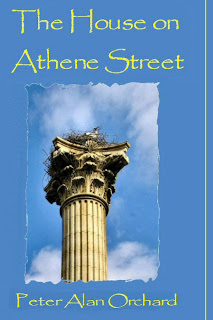
I've now produced three publications: a full-length historical mystery (A Pig in the Roses), a 10,000-word adventure for children (The House on Athene Street) and a collection of previously-blogged historical short stories (Voices from the Past).  So what exactly is the particular pleasure of writing short stuff?

First, the obvious. It's shorter. There's no need to develop the long plot strands, no need for the complex building of tension and interest over a long story arc. But is it easier to write? I'm not so sure. There still has to be the same care in developing character and atmosphere, perhaps more because of the shorter space available to create the effects. I tend to think in scenes, often deriving from a single image or character, and usually find short stories arriving in my head mostly complete bar the actual writing, which which is handy for someone who hates plotting as much as I do.

The stories in Voices from the Past are a varied lot, some very short, some humorous, a ghost story or two. One story, Hoard, set in Roman Britain, has already appeared on this blog and here's a bit from Hallveig, a brief sketch set in medieval Iceland :

Below her the farmhouse sat comfortably into the fellside, thick turf walls on a timber frame buried in the earth, the floor inside lower than the grass cropped outside by Gelli’s sheep. Inside Hallveig’s sullen daughter Rannveig, fifteen and ripe for marriage, would be taking bread from the oven, practising for her husband. Red Gelli and his sons had been out after the fish all day on the breathing sea to the south, opposite to the thunder.

Hallveig smiled and picked up her spade. She remembered Gelli in his young days, burning with the stories brought back by the companions of Leif Eriksson, tales of the seas beyond Greenland, of the vine-country, of the skraelings with their skin boats and red hair and furs. They had taken ship together, sturdy young man and wife and baby sons going a-viking, sailing west late in the season to find new lands unknown to Leif Eriksson. Several days out at sea they hit seas like mountains, seething and roaring, sucking at the keel of the ship, winds that tore the sail and lifted the waves inboard. Back they came through icebergs striped like the jaws of whales, wallowing in the tide with nothing to show for it, and never sailed out of sight of land again unless it was after the fish.

The House on Athene Street, like my whodunnit A Pig in the Roses, is a kidnap-and-chase plot set in Athens in the fifth century BC. Since it's aimed at the 9-12s, the main aim was to keep the story moving, the tone light and the dialogue perky. In this scene from the subplot the parents, Helene and Lysikles, have arranged a social visit to a family whose unprepossessing son may make a serviceable husband for the hero's sister, Xanthippe, when she's of age (around the mid-teens in ancient Greece). Helene is determined but Xanthippe is just eleven and less than enchanted, so Hermippos, the thirteen-year-old hero, decides to make mischief:

Oh, wonderful, Xanthippe thought. The great get-Xanthippe-married-off-to-the-Nose conspiracy is up and running. And here he comes, the great one himself.

Sophilos appeared in the doorway, a gangling youth of nearly seventeen with a vague smile lighting up those parts of his face not occupied by nose. He rubbed hands on his tunic, leaving soil stains, and nodded shyly to the visitors.

‘I’ve been chasing the pig out of the vegetable patch,’ he said. ‘It likes onions.’

Xanthippe felt a giggle rising up her body and threw her brother an imploring look. Save me, it said. Please don’t let me laugh at him!

Hermippos marched over to Sophilos and grabbed him by the arm. ’Tell me about the pig, Sophilos,’ he said firmly. ’And have you started cadet training yet? It starts at your age, doesn’t it? I can’t wait to start, but I’m too young.’ Together the boys sauntered out into the sunlight. ’Is that the pig over there,’ Hermippos went on happily, ’digging up turnips with its nose?’

Her fingers clasped over her mouth and tears of silent laughter in her eyes, Xanthippe heard her mother say, ‘There, Lysikles, I said the boys always got on well together.’

The House in Athene Street is $2.99, Voices from the Past is $1.99 and A Pig in the Roses is $3.99. All are Smashwords premium titles and available in all the usual ebook formats. Details are on my Smashwords page and at http://www.peteralanorchard.net/, where you'll also find a short story, Starlight, for $0.99.

Peter
http://www.peteralanorchard.net/
http://www.twitter.com/peteraorchard
http://www.smashwords.com/profile/view/PeterAlanOrchard