The Romance Reviews
Showing posts with label short stories. Show all posts

Thursday, 22 February 2018

Bottom Tales and Others (Collection of Short Stories) by Loretta Moore


 Bottom Tales and Others
(Collection of short stories)
    by Loretta Moore
                                      Softcover: 126 pages
                                      Language: English
                                                  ISBN-13: 978-1-941157-05-3
                                     Product Dimensions: 5.5 X 8.5  inches 
 A lost world revealed: the bottom, an African American community that once existed in the city of Philadelphia 

Imagine a community where neighbors all know and assist each other, where they never have to lock their doors. A myth, a pleasant dream? No, this once-vibrant African American community existed as part of Philadelphia. The Bottom, also known as Black Bottom, was located roughly between 33rd and 40th streets east and west and to Lancaster and University Boulevard in what Philadelphia city planners called Area 3. It was a place that transcended the physical infrastructure of the city. This community existed from the early 1900s until the mid-to-late 1950s before state and federal urban renewal displaced its residents. It was in 1984 that the first reunion of former Bottom residents was held, and later this lost community was honored by the City of Philadelphia. In 1999, the city declared the last Sunday in August as “Black Bottom Day,” as a tribute to the legacy and the history of this lost community. It is through Bottom Tales and Others that this vanished community of over 5000 residents again lives. Like raising Lazarus from the dead, author Loretta Moore brings this once-thriving community back to life for you to experience, along with the edifying journeys the Bottom inspires.

  
BLURB

THE BOTTOM


The Bottom , also known as Black Bottom, existed as an African American community in the City of Philadelphia. Located roughly between 33rd and 40th streets east and west and to Lancaster and University Boulevard, The Bottom existed from the early 1900s until the mid-to-late 1950s. In 1999, the city declared the last Sunday in August as “Black Bottom Day,” as a tribute to the legacy and the history of this West Philadelphia community.

The Bottom during the 1940s and 50s, while I was growing up was a place spreading encouragement and hope, and was astounding with productions of myths and glory. Because of its texture and fertility, no amount of sophistication could have provided better than the Bottom, for it was an excellent, bejeweled poetic excursion nothing could drain from my memory; it endued the Writer I am today.


 Excerpt


THE BOTTOM
By: Loretta Moore

     The Bottom was a lowly place inhabited by the working class, and just as much by the poor. Nevertheless, throughout, my childhood flowed with precious, valuable humanity. A principality of longing and invention, The Bottom introduced glimpses of the brilliant light of inspiration sparkling wonder. A location of dim surroundings during the 1940’s 50’s, The Bottom was for me a place deep mystery, intrigue and discovery with astounding productions of myths and glory, spreading encouragement and hope. Because of its texture and fertility, no amount of sophistication could have provided better than The Bottom for it was an excellent, bejeweled, poetic excursion nothing could drain from my memory; it authorized the Writer I am today.   
      Ostensibly, The Bottom was so called because it was wedged in the lower portion of West Philadelphia. (The ascription, “The Bottom” could also have meant that most of the residents lived at the low end of society.) Lowly, brick row houses banked many of The Bottom’s mostly little and narrow streets. Some apartment buildings along with some impressive, stalwart homes, and avenues and boulevards were also in the area. Over the many years the working-class community had existed, The Bottom had been inhabited by many ethnic groups: Germans, Irish, Italians, Jews, Dutch, Polish, plus others. However, The Bottom in which I grew up during the l940’s and 50’s was composed of a majority of Negroes, with only a sprinkling of its’ earlier residents.
      The Bottom’s inhabitants were largely poor. People were employed in factories, plants, as domestics and in other service-type jobs: city workers, garages and filling stations, restaurants, hotels as well as in other skilled and unskilled jobs across the City.  Nearly everyone in the community worked for a living and in spite of the struggles and misery faced by all, The Bottom was incorporated by a caring, cooperative spirit.    
       In those times, many living in The Bottom were among that enormous flow of Negroes who were abandoning their southern homeland for big northern cities. My parents and a slew of my relatives were a part of that huge migration abandoning the south. They were romantics, adventurers, young dark pilgrims clothed in innocence and immaturity, leaving behind the burden of poverty and racial segregation and injustice, for a life in the North they assumed promised shelter, and was better. Northern-bound, the southerners traveled on trains, Greyhound and Trailway buses, and by automobile. Traversing rails, highways and roads, with their projections dented by doubt, and visions ushered by burgeoning loneliness, they were wrapped in the strength of an idealistic dream, and hope.  (Traveling in the summer months meant days of relentless, burdensome heat and blazing sun with images of solemn countryside and burning seas of prolific fields, while nights swelled with the sweet aromas of honeysuckle and magnolia, and the pure magic of soundless, smooth darkness looming with mystery and intimidation over long tracts of landscape. Autumn and winter travel presented cobalt, somber skies, cold rain and vast vigils of stark, lonesome woods. And, there were the sights of lifeless pasture, and empty fields stretched by stubble and isolation. Some areas of countryside bore gracious manors, or tiny, tarpaper houses shackled to silent, leaden landscapes). 
      The announcement was affectionately spread of ‘newcomers’ throughout the community more rapidly than a runner passes a baton.  Habitats in the northern cities were enriched by the arrivals of southerners, for they brought a tender message: the melodious song of the south. Sadly, the new implants were separated from a place that they never left with finality, and seemed always to long for their southern roots. (An association, a bond had been broken, leaving a cherished memory of their southern past nurtured in their reflections, and in the familiar accented phrase used by all, “Down Home,” which when said was by description, a badge of honor and/or courage.     
       Separated as it was, The Bottom somehow appeared to be entrenched in the aftermath of the progressive activity of the city of Philadelphia. There seemed to be a muted, gray, solemn atmosphere with shadowy clouds, formed by fallout from city smokestacks hovering over the area. And, incredibly, within certain boundaries sometimes The Bottom was capable of inducing spirits, and of producing unsettling images, and would seem to have fallen under a mythological spell. (The darkened heavens would erupt into dim, shadowy images of horrific Homeric and other ancient Greek allegories. However, more often the placid image of Aesop, of fable fame, with quill in hand and tablet, would glide across the sky on an opulent, white soothing cloud. The phenomenal transcendental occurrences of The Bottom were not always aloft, or of epic proportion or associated with legend and mythology. Transformations on the tiny streets sometimes were the canals of Venice or Holland. Once, seemingly in commemoration of Good Friday, all of a sudden thunderous, dark, ominous clouds dominated the continuous rows of lowly dwellings, masking everything in the small lane in which I lived. And then, almost shattering my composure, the Crucifixion appeared as a fresco, and remained an amazing presence until dark clouds were lifted away on the day of Christ’s Resurrection, and brilliant sunshine poured into the little narrow street).    
       The Bottom was overpowered and rendered helpless on this unrelenting broiling summer day so hot, the atmosphere incorporated the sulfurous stench of melting asphalt and abound with dizzying waves of heat.
     I lay on the parlor floor against the fading flowers on the worn linoleum, my eight-year-old imagination captured by something transporting me from an idle spirit which straddled the plain, uneventful surface of The Bottom. I was supremely in the presence of magic encasing every trickle of life, fashioning everything and bulging my thoughts with everything around me. I was standing on the platform of life, lifted from my tepid environment toward pleasant, cheerful, glowing, comforting episodes and passages, to picturesque pictorials, and images and places cultivated by a universe of magic and mystery beckoning me.


                                                           “A Bottom ‘Fourth’”

     My family and I were among the throngs of people returning home from the Fourth of July celebration held in Fairmount Park. The City Park where we’d spent the day picnicking with relatives, friends and crowds of people was not far, maybe a four-block walk from Mt. Vernon Street. The Fourth of July was the fulfillment of the summer weeks and days I had spent anticipating it. The day began early with the delicious aroma of fried chicken and the sound of my mother downstairs in the kitchen, preparing an enormous picnic lunch our family would carry to the park. At that very moment, all of my expectations for Independence Day were released.
     A blazing, hot day framed thousands of celebrants and Fairmount Park. The exciting day had seen me and others through: there’d been lots of fun and games and great-tasting foods, and much romping about on the luscious green grounds for which Fairmount Park is exemplary. Even the Fourth of July program that had been echoing throughout the day from a platform across the ocean of enthusiastic picnickers had been entertaining and interesting. On Independence Day the lush, pantheon grounds of Fairmount Park served the public at large in a patriotic sense and in a social context as well. (During all of the levity and celebration, a hallowed, patriotic spirit presided over the surroundings: a permanence and intransigence parlayed and transposed the serene park grounds that a hollow strain inhabited. There were emanations from the American Revolution and from other wars fought in the preservation of our country’s freedoms. George Washington’s Troops at Valley Forge-Revolutionary War; the War of l812; Gettysburg; Manassas; Appomattox; the Civil War; the Mexican/American War; the Great War; World War I; Normandy; D-Day-World War II).
      The affect of wars on our community was extensive. My family knew personally men who while fighting in World War II were injured or lost their lives. One very sad case involved a young man, who returned from the war with Japan, hopelessly shell-shocked. Another situation concerned a very notable action on the part of an employer at the factory where my mother worked. It seems that he was one of the three soldiers to place the American flag on the hilltop at Normandy, a brave act indeed. Nevertheless, he contracted a physical condition fighting in the jungles that left him with an incurable odor. A very young mother we knew was left with a toddler to rear alone when her young husband was blown to pieces by German forces. And, of course there were others, some even relatives who courageously contributed to the war efforts of our nation. I was among my family and others in the park’s natural setting. The lush, green floor was fertile ground, reconnecting the past and me. (As I listened, images and transformations of my ancestors hovered over the intimate conversations of my relatives, recreating the source of my background. The experience was comforting, encouraging, and inspiring, even elevating). A long day of excitement ended with the beauty and splendor of fireworks shattering the violet night sky.
     Now, the plenteous, fulfilling experience was over and families and others were returning to where they dwelled in the Bottom. I was lost to longing and regret as I stood on the corner at the top of Mt Vernon Street.  (A concentration of darkness and gloom saturated the lifeless rummage and plumbing fixture businesses and other businesses at that location. The darkened sky floated with stars and cloudy formations-some of it vestiges of exploded fireworks. A volume of sadness and disappointment infiltrated the darkness magnifying the solemn retraction that normally clung over the Bottom, with the concentration overflowing into Mt. Vernon Street.)  With a deep sense of regret and reluctance, I climbed down into the canyon of Mt. Vernon Street. The spectacular, explosive day was over, my spirit and I would have to wait for next year’s ‘Fourth.’


Links:


email: vlmprod@aol.com


http://vlorettamoore.wixsite.com/lorettamoore

Twitter: Moo Viney

http://www.facebook@lorettamoore

www.linkedin.com/lorettamoore


Tuesday, 28 June 2011

Rosemary Gemmell: Short stories - experimenting with Kindle

Many thanks to Lindsay for inviting me to her lovely blog today.

As a freelance writer, I’ve had many short stories published over the years, mostly in UK magazines, a few in anthologies, and a couple in a US magazine. I’ve also won a few prizes. But once all of these stories were published, they were left languishing in the archives while I wrote some more stories and progressed to novels.

Then the e-publishing phenomenon arrived and a few of my writing friends began to put their novels on to Kindle, very successfully. When my first novel was published as an e-book in May (as Romy Gemmell, through Champagne Books), I experienced the joy of reading my work on my kindle. When one of my friends, Chris, gave our writing forum the detailed instructions for putting work on to Amazon, I decided to give it a go in a smaller way!

The resulting experiment, Reshaping the Past, is a small collection of eight of my previously published short stories. I designed the cover from a single photograph I had taken of a rose. I used the title of the final story for the collection, as it sums up the collection as a whole and was the story published in the fund-raising 100 Stories for Haiti anthology last year. The subtitle, Short Stories of Love and Relationships, is to give an indication of the contents.

In no particular order, there is a prize-winning story about a teenager who has to face the consequences of her actions; a woman confronting her past; a troubled man who begins learning to love again; a girl who seeks answers from a painting; a man who accepts the changes of the past, and two lighthearted romantic stories.

The whole process was time-consuming, but the instructions Chris had provided made it all work relatively smoothly. And it was fun! It is now available from amazon.co.uk and amazon.com. I might think about another collection in the future, but only for my stories that have been in magazines. I can’t help thinking it’s a better use for my published stories than lying forgotten in the archives!

Rosemary Gemmell

http://www.rosemarygemmell.com/
http://ros-readingandwriting.blogspot.com/
http://romygemmell.blogspot.com/

Saturday, 28 May 2011

The beauty of short stories and novellas

To my mind, short stories and novellas have advantages whether you write them or read them.

As a reader, you can explore writers new to you without investing too much time or expense. You can take a chance. You can explore new genres. If you’re short of time, novellas and short stories can be a wonderful way to switch off.

Short stories and novellas can give a very intense reading experience. Focusing on just a few characters and settings, the reader is quickly drawn in. there are no wasted words, no incidental plots, no distractions.

Writers can also exploit these advantages, because the shorter forms are becoming increasingly popular with the growth of ereaders, audio books and so on.

Short stories to me are jewelled moments – very intense, a moment of revelation or decision. I’ve recently put together a collection, A Rose of Midsummer and other Stories, and put them on Smashwords. I’m hoping to do more later, as a Christmas collection.


Novellas are fun to write, particularly in the romance genre. As Linda Banche said in her post this week, the romance novella gives the writer a wonderful chance to home in on the hero and heroine and their relationship. Any sub-plot can have a direct impact on their love, testing it and in some cases throwing them together so it can develop. My own novellas, A Secret Treasure and Holiday in Bologna, both use external threats to add to the romantic tension between my heroes and heroines.

If you fancy something a touch hotter, there are my Siren shorties set in ancient Rome, too.

So don't give up on the full-length novels, but long may the novella and the short story flourish!

Tuesday, 17 May 2011

Peter Alan Orchard: the pleasure of keeping the writing short.

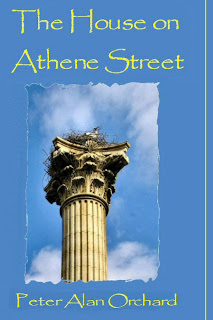
I've now produced three publications: a full-length historical mystery (A Pig in the Roses), a 10,000-word adventure for children (The House on Athene Street) and a collection of previously-blogged historical short stories (Voices from the Past).  So what exactly is the particular pleasure of writing short stuff?

First, the obvious. It's shorter. There's no need to develop the long plot strands, no need for the complex building of tension and interest over a long story arc. But is it easier to write? I'm not so sure. There still has to be the same care in developing character and atmosphere, perhaps more because of the shorter space available to create the effects. I tend to think in scenes, often deriving from a single image or character, and usually find short stories arriving in my head mostly complete bar the actual writing, which which is handy for someone who hates plotting as much as I do.

The stories in Voices from the Past are a varied lot, some very short, some humorous, a ghost story or two. One story, Hoard, set in Roman Britain, has already appeared on this blog and here's a bit from Hallveig, a brief sketch set in medieval Iceland :

Below her the farmhouse sat comfortably into the fellside, thick turf walls on a timber frame buried in the earth, the floor inside lower than the grass cropped outside by Gelli’s sheep. Inside Hallveig’s sullen daughter Rannveig, fifteen and ripe for marriage, would be taking bread from the oven, practising for her husband. Red Gelli and his sons had been out after the fish all day on the breathing sea to the south, opposite to the thunder.

Hallveig smiled and picked up her spade. She remembered Gelli in his young days, burning with the stories brought back by the companions of Leif Eriksson, tales of the seas beyond Greenland, of the vine-country, of the skraelings with their skin boats and red hair and furs. They had taken ship together, sturdy young man and wife and baby sons going a-viking, sailing west late in the season to find new lands unknown to Leif Eriksson. Several days out at sea they hit seas like mountains, seething and roaring, sucking at the keel of the ship, winds that tore the sail and lifted the waves inboard. Back they came through icebergs striped like the jaws of whales, wallowing in the tide with nothing to show for it, and never sailed out of sight of land again unless it was after the fish.

The House on Athene Street, like my whodunnit A Pig in the Roses, is a kidnap-and-chase plot set in Athens in the fifth century BC. Since it's aimed at the 9-12s, the main aim was to keep the story moving, the tone light and the dialogue perky. In this scene from the subplot the parents, Helene and Lysikles, have arranged a social visit to a family whose unprepossessing son may make a serviceable husband for the hero's sister, Xanthippe, when she's of age (around the mid-teens in ancient Greece). Helene is determined but Xanthippe is just eleven and less than enchanted, so Hermippos, the thirteen-year-old hero, decides to make mischief:

Oh, wonderful, Xanthippe thought. The great get-Xanthippe-married-off-to-the-Nose conspiracy is up and running. And here he comes, the great one himself.

Sophilos appeared in the doorway, a gangling youth of nearly seventeen with a vague smile lighting up those parts of his face not occupied by nose. He rubbed hands on his tunic, leaving soil stains, and nodded shyly to the visitors.

‘I’ve been chasing the pig out of the vegetable patch,’ he said. ‘It likes onions.’

Xanthippe felt a giggle rising up her body and threw her brother an imploring look. Save me, it said. Please don’t let me laugh at him!

Hermippos marched over to Sophilos and grabbed him by the arm. ’Tell me about the pig, Sophilos,’ he said firmly. ’And have you started cadet training yet? It starts at your age, doesn’t it? I can’t wait to start, but I’m too young.’ Together the boys sauntered out into the sunlight. ’Is that the pig over there,’ Hermippos went on happily, ’digging up turnips with its nose?’

Her fingers clasped over her mouth and tears of silent laughter in her eyes, Xanthippe heard her mother say, ‘There, Lysikles, I said the boys always got on well together.’

The House in Athene Street is $2.99, Voices from the Past is $1.99 and A Pig in the Roses is $3.99. All are Smashwords premium titles and available in all the usual ebook formats. Details are on my Smashwords page and at http://www.peteralanorchard.net/, where you'll also find a short story, Starlight, for $0.99.

Peter
http://www.peteralanorchard.net/
http://www.twitter.com/peteraorchard
http://www.smashwords.com/profile/view/PeterAlanOrchard

Sunday, 25 July 2010

From Long Winded to Short Story

It wouldn’t be the first time that I’ve been called long winded – even when I tell a story socially I tend to expound, flourish and build. What may only have been a simple childhood event becomes a long and entertaining tale. Of course I feel most comfortable writing at least 60,000 words. As a journalist (my “other” job) I’ve often been limited to under 1,000 words for an article so I do know how to eliminate useless words – but that’s NOT creative fiction.

The difference between short story and novel is more than length, although there are acceptable and fairly standard word lengths as guidelines. Generally a short story (and this can vary by publication) is approximately 10-thousand words or less for magazines and up to 15-thousand words for anthologies. Novels (again, this varies by publisher) start at about 60-thousand words and go up from there.

Sometime back I forced myself to write a SHORT story; ironically I believe we need to stretch ourselves and do what we don’t normally do and my stretching was being short. (pu-lease, no height jokes here) To date I’ve got entries in four short story anthologies: Forever Friends, With Arms Wide Open, Nature’s Gifts and (coming soon) Passionate Hearts. In order to keep the tales short, I had to limit my normal tendency to go off on a tangent, I had to keep it simple while still presenting believable characters and an interesting story.

In my short story Not Alone which appeared in Mandimam Press' Forever Friends anthology, I told the story of two college age friends who were dealing with guilt and grief after losing one of their friends in a car accident. Told in first person narrative, the main conflict dealt with the speaker’s decision whether to stand by her friend who was being blamed for the accident. The story had one central conflict, two main characters, spanned just a few weeks in time, and was told in 2500 words.

A short story is not merely a condensed version of a novel. Short stories will often have one major plot, a limited number of characters and revolve around a concise period of time. Novels can have intricate sub-plots woven into the thread, a cast of characters that come and go throughout the book, and the time span can be up to several years. A short story is a segment of life, the novel can depict life.

My most recent short story The Vacation will be in Vanilla Heart Publishing’s Passionate Hearts which will be released later this year. This is a romantic story of a couple learning to trust and depend on each other – I’m very excited. (by the way, the publisher is still accepting submissions until Aug 17!)
In the meanwhile, my current work-in-progress is another novel length manuscript. I guess I just love to weave stories.

Please visit my website and my author's blog to keep up on the latest about my long and short stories. Thanks for stopping by!

~ Chelle


Wednesday, 21 July 2010

Shorts are great for longs!

Feather Pen © LK HunsakerI write Looong!

While at a signing with a group of authors this last weekend, one of them asked how many words I thought might be in my first two Rehearsal books. Without having to think, I said 260,000. Each. And there are three more to come. They said I was determined. I said I was obsessed.

Actually, as Pooh said, I use just the amount of words I need and no more (paraphrased). Or at least I try not to use more than I truly need to get the story out the way it needs to be. Do my Rehearsal books need to be so long? Of course. Why else would I write them so long? Could I do the same story shorter? I suppose, but then so much is left out and it wouldn’t truly be the same story. I did cut them both, by the way. I cut roughly 30,000 words out during edits. Each. Only those that did not effect the story, to sharpen and tighten. Yes, I hear laughter, but honestly, the story is fairly tight for literary-type fiction. It’s loooong for romance, of course, although it is romance.

As a change sometime in the midst of working on the novels, I decided to accept a contest challenge: 350 word stories, 5 of them. Hm. 350 and not 3,500 or 35,000? A full story? Of course a story needs to have the beginning, the climax, and the end, regardless of length. It has to have a point to it: character growth, something a reader can take with her. It’s not just a scene from a story. It has to be a “story” in itself.

I like challenges. Never mind I’d never written short stories before or that 350 words sounds like a quick email, not a complete story! Guess what? I got addicted. Ever since, I’ve been writing shorts in between my longs. It’s wonderful training to write concise and to focus on the heart of the story. I’m quite sure it’s been beneficial to my novels. My newest is only 65,000 words!

By this point, I have folders full of short stories. Most are around 1,000 words. Two folders are story series. In short (pun intended), I’m having a blast with them!

I was also part of a discussion once where authors were asked what they did when minor characters threatened to take over the story. Simple, I said. I give them their own short stories related to the novel and put them out as free reads. Brilliant, they said. Well, I won’t claim brilliance, but I do enjoy extending the novels that way, and apparently readers enjoy them since three of my shorts on Smashwords now have more than 500 downloads each, with several more catching up.

One of the novel-related stories is now part of CRR’s first Cupid Diaries anthology, Moments In Time. You can find it here.

If you’re looking to stretch your writing wings and haven’t tried shorts, why not? They are little time investment and a great way to add extras to your website/repertoire or just to experiment with different genres.

For the sake of amusement, here’s one of those first 350 word attempts:

---

The Truth Is


“What you read in the paper was a lie.”


Letting the old newspaper, yellowed with age and frayed at its edges, fall to my lap, I stayed silent, watching mother’s face. There was extra moisture making her sad eyes sparkle in a betraying way.


Looking beyond me, maybe to somewhere she could still see my father, Mother sighed, a heavy sigh full of loneliness. Father left us when I was still only a child, and I adored him. The old paper I found in his belongings suggested I shouldn’t.


“I suppose no one cared about the truth of things back then. Maybe they still don’t care about the truth of things. Truth doesn’t sell unless it’s a horrendous truth.” Mother continued to look into her past while speaking in a near whisper.


“The truth is that your father was more devoted to me than he had a right to be. He was overly devoted, if there is such a thing. He flirted, yes. It was part of his job. They liked to talk about it in the papers. They liked to make it more than it was.” A single tear streamed down Mother’s cheek.


“The truth is that your father was more devoted to you than most of those men condemning him likely are to their own children. Maybe it made them see guilt in themselves. Maybe it was their way of getting even. It’s all such a horrible thing to do to the memory of such a good man. And no one on earth, other than those of us who knew him, seems to care.”


I stood, going to Mother to wrap my trembling arms around her. “I care. And I will make others care. I will write the truth.”


My autobiography found its first words that evening.


--
LKH-Nov09-2689-cp1in


LK Hunsaker
~Literary Romance with an Artsy Twist~


Thanks for stopping by!

Find me on my site www.lkhunsaker.com 
or on my blog  http://lkhunsaker.blogspot.com
as well as my shorts and ebooks on www.Smashwords.com


``